Basement insulation in Twin Falls ID - warm basement walls, with water handled first
Cold floors, a chilly finished room or damp-smelling concrete downstairs? We check for water first, then insulate the walls so the basement holds heat.
- Service
- Basement insulation
- Call
- (208) 544-9023
How can you tell your basement needs insulation?
Cold floors over the basement
The floor above the basement stays cold all winter, and the furnace seems to run more than it should. That usually means bare concrete and the open framing along the top of the walls are pulling heat out of the house, and every winter you wait shows up on the power bill.
A musty, damp smell
A musty smell, dark damp spots on the concrete or a white chalky crust usually means moisture is getting in or condensing on cold walls. That has to be sorted out before any insulation goes up, because covering it only hides it while it works on the framing and whatever you store down there.
Cold air along the top
On a windy day you can often feel outside air coming in along the top of the foundation wall and around pipes and wires that pass through it. Those gaps let cold air spill across the floor, and insulation put over them without sealing ends up fighting a draft.
What does it take to insulate a basement in Twin Falls?
Basement insulation in Twin Falls covers your foundation walls and the rim joist, the wood framing that sits on top of the concrete, so warm indoor air stops reaching those cold surfaces. The basement holds its heat, and the floor above stops feeling cold underfoot.
Most basement calls we get around Twin Falls, Jerome and Kimberly start with cold floors, a chilly spare room or a plan to finish the space. The price mostly comes down to how much wall there is, whether it's bare concrete or already framed, which material suits it and whether anything has to be fixed before we start. The schedule turns on that same fix, because we won't insulate a wall that's taking on water, and on how much has to be moved away from the walls. When I come out, you get a written price for your own basement, and if part of the house sits over a crawl space, I can look at crawl space insulation on the same visit.
Details to note before an estimate
- Rough square footage of the basement
- Bare concrete or framed walls
- Cracks, damp spots or water coming in
- How you use or plan to use it
How we handle basement insulation
I start by looking the basement over before anything goes in, checking the walls, the edge where the floor meets them, the rim joist and every spot where pipes and wires come through. Water comes first, so if the basement takes on water I'll tell you plainly and we hold off until it's fixed, usually starting outside with where the gutters and downspouts send it. I also take a hard look at the foundation itself, since insulation put over a wall with structural trouble can hide the problem or make it worse. Once the walls are dry and sound, our crew seals the gaps around pipes, wires and the top of the wall, installs material that can handle a cool concrete wall and cleans up before we go.
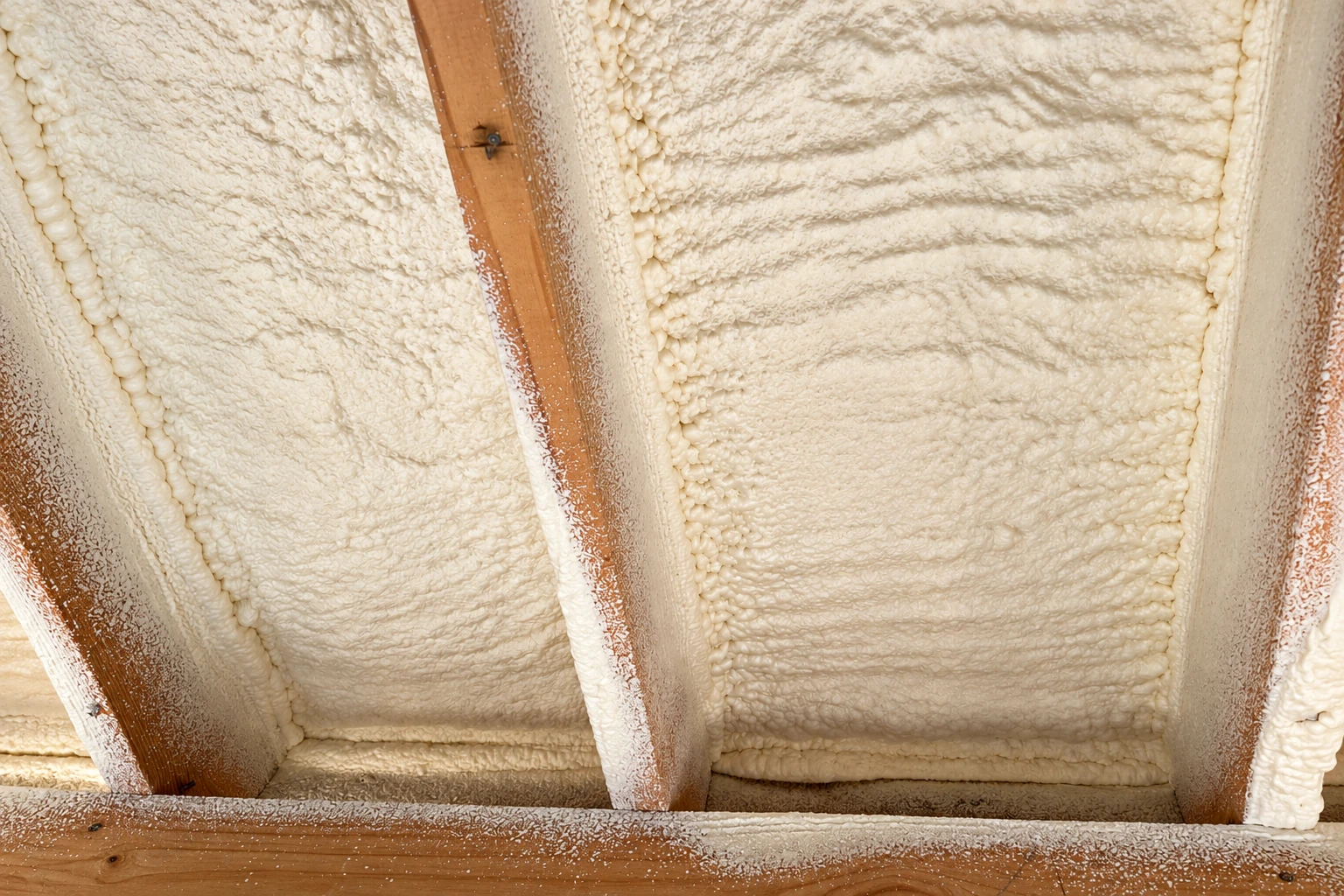
On basement concrete we usually lean on closed-cell foam insulation, a dense foam that blocks moisture, because it seals air and insulates in one pass and doesn't mind a cool wall. It costs more than batts, and on a basement wall I think it's worth it. Open-cell foam insulation is lighter and softer, so I keep it for walls and rooflines upstairs if you're doing more of the house.
Foam work that often goes with a basement
Closed-cell foam insulation
Good for a concrete wall or rim joist that stays cool, since the dense foam seals air and holds up if moisture finds it.
Open-cell foam insulation
Worth asking about if you're also tackling drafty walls or a roofline upstairs, where a softer foam fills odd cavities and quiets sound.
What happens after you call about your basement?
Call or send a note
Call (208) 544-9023 or use the form, and we'll get back to you to set up a visit. It helps to know the rough size of the basement and whether it's ever had water in it.
I look the basement over
I come out myself, check the walls, rim joist, floor edges and any old insulation, and write up the estimate. You get a price for your basement, the material I'd use and why, so you know the cost before anything starts.
Fix what comes first
If water or a foundation problem turned up, you hear about it before we book anything. We wait until it's handled, because insulation over a wet or failing wall just buries the trouble.
Install and walk through
Our crew does the install, with a lead installer on site who knows what we talked about at the estimate. When it's done, we walk the finished basement with you.
What people ask about basement insulation
How much does basement insulation cost in Twin Falls?
Across the US, insulating a basement usually costs about $4.50 to $6.40 per square foot, and that's a national range, not a local quote. Your number moves with how much wall there is, the material, whether the walls are already framed and whether anything has to be fixed first. I'll give you a written price for your own basement when I come out.
What is the best insulation for basement walls?
Basement walls should get insulation that isn't bothered by water, because cellulose, fiberglass and open-cell spray foam all lose effectiveness when they get wet, and cellulose right against the concrete is generally not recommended. In most basements, foam on the wall also needs a fire or ignition barrier over it, so count that covering as part of the job. If you put fiberglass on a framed wall, skip plastic sheeting or foil on the room side, which can trap moisture in the wall, and use kraft-faced batts, the paper-backed kind, or latex paint on the drywall instead.
Should I insulate my basement walls or the ceiling?
Usually the walls, because they take less insulation than the ceiling and make it easier to get one unbroken layer that stops heat loss and air leaks. A basement ceiling is typically crossed by wiring, plumbing and ductwork, so a tight layer up there is hard to get.
Does an insulation contractor need to be registered in Idaho?
Yes, Idaho requires contractor registration, not a license, for any construction job over $2,000 in materials and labor unless the person is exempt, and the Idaho Contractors Board enforces it. Owners doing their own work on their own land are exempt when they don't plan to sell within 12 months. We're fully licensed and insured.
Do I need a permit to insulate my basement in Twin Falls?
It depends on what the job includes, so check before work starts. The City of Twin Falls has a basement remodel guideline you can read before planning basement work, and I'll talk permits through with you at the estimate. When we're not sure, we check with the city's building office before we start.
How do I get a free radon test kit in Twin Falls?
You can check one out from Twin Falls Public Library through Idaho's Radon Library Lending Program. The state says 2 out of 5 Idaho homes have elevated radon and levels vary from place to place, so testing is the only way to know about your house. It's an easy step to take while you're still planning the basement work.
Get a basement insulation estimate that starts with a look for water
Send the form and we'll get back to you within one business day to set a time. I come out, look over the basement and give you a free estimate on site, with no obligation. If something needs fixing before we start, you'll hear about it first.
Explore our services and areas
Services
- Spray foam insulation
- Attic insulation
- Blown-in insulation
- Home insulation
- Insulation removal
- Crawl space insulation
- Wall insulation
- Air sealing services
- Closed-cell foam insulation
- Open-cell foam insulation
- Commercial insulation
- Crawl space vapor barrier
- Vapor barrier installation
- Attic air sealing
- Retrofit insulation
Service areas
Call before the basement gets framed
Bare concrete is simpler to check and insulate before studs and drywall go up, so a look now saves opening finished walls later.