Home insulation in Twin Falls ID - warm rooms and money spent where it counts
Cold floors, a hot upstairs or a climbing power bill? We find where your house loses heat and fix that first.
- Service
- Home insulation
- Call
- (208) 544-9023
How can you tell your house needs more insulation?
Rooms that won't warm up
The room over the garage or a back bedroom stays cold while the furnace keeps running. That usually means thin insulation and open gaps around it, and every week you wait you're paying to heat air that slips right back outside.
Cold floors underfoot
The floors feel chilly through your socks even with the heat turned up, especially over a crawl space. Most of the time the rim boards and the floor above the crawl space have little or nothing on them, and each winter you pay for that same lost heat again.
Damp or dirty attic insulation
If you look through the hatch and see insulation that's matted, stained or full of droppings, something is letting water or animals in. Leave it, and the framing underneath stays damp, and anything new laid on top just buries the trouble.
What does insulating a whole house involve?
Home insulation in Twin Falls means finding where your house loses heat, usually the attic, the floors over the crawl space and the rim boards along the foundation, then sealing those gaps and adding insulation where it does the most good. When it's done right, the rooms hold their heat in winter and the upstairs stays cooler in summer.
Most calls start with one cold room or a power bill that keeps creeping up, and more fluff in the attic is rarely the whole answer. The price moves with how much area we cover, what's already in there and whether any of it has to come out, which kind of insulation fits each spot, and how easy the attic and crawl space are to get into. The schedule turns mostly on what I find at the look-over, because a damp spot or old insulation that needs testing gets handled before anything new goes in, and you'll get your own figure at the estimate.
Details to note before an estimate
- Rough age of the house
- Where the attic hatch is
- Rooms that run cold or hot
- Any damp or flaky gray insulation
How we handle home insulation
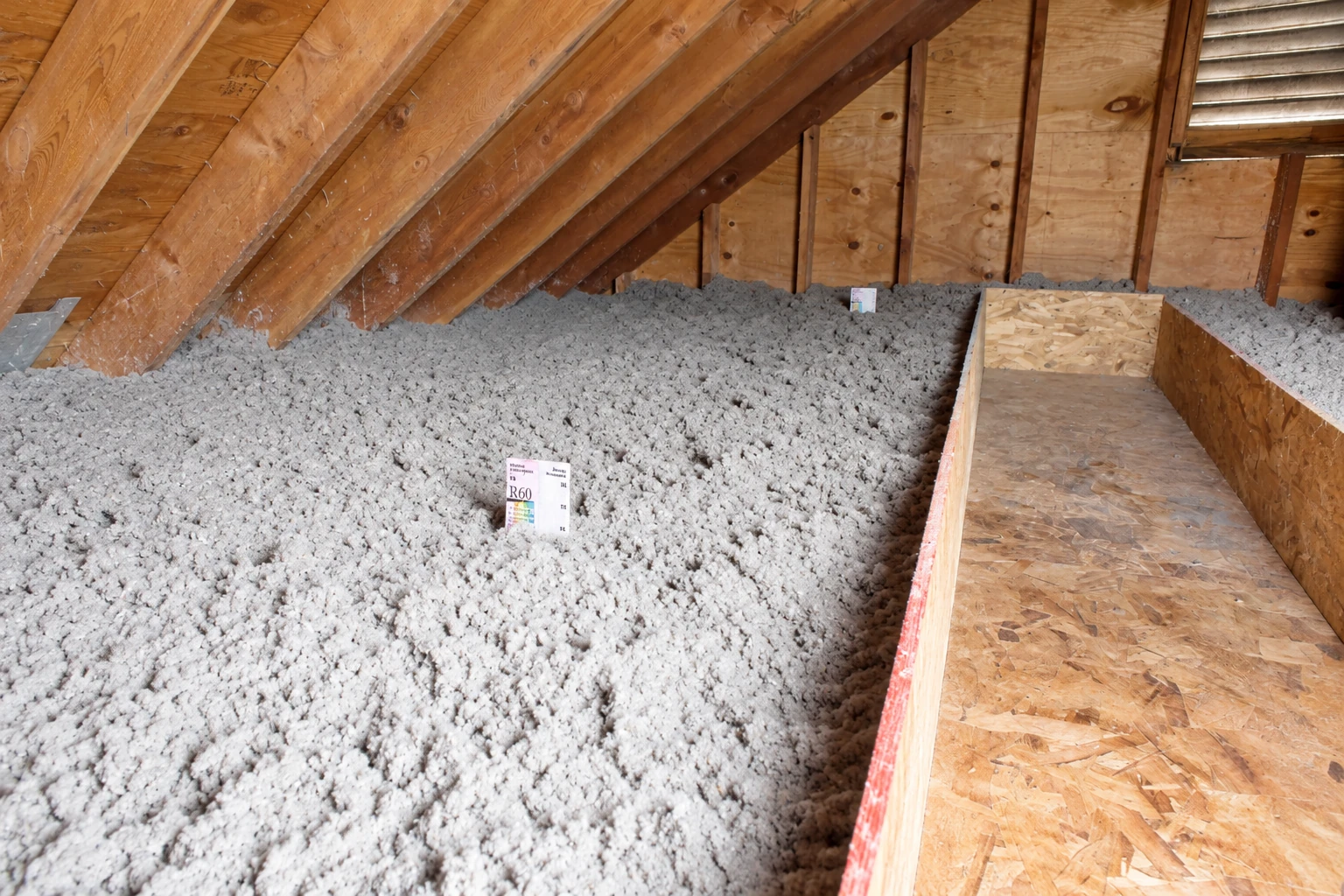
Most houses need a plan more than a product, so I look at the attic, the floors, the crawl space and the rim boards, the framing that sits on top of the foundation, all together before anything goes in. I check how many inches are already up there and whether it's clean and dry, because fresh material over soaked or dirty insulation just keeps the problem around. Then our crew seals the gaps, keeps the eave vents along the roof edge open so the attic can still breathe, and runs the insulation full depth out to the edges, where it usually ends up thinnest. Foam costs more and seals air while it insulates, but for most attics, sealing the gaps and topping up with loose fill gets you further for the money, unless your ductwork runs up there. Houses here work hard both ways, since the city sizes heating and cooling systems for 2 degrees in winter and 95 in summer, so a gap that costs you in January costs you again in July.
If what's up there is wet, matted or full of droppings, we start with insulation removal so the new material goes onto clean, dry framing. Cold floors usually send us under the house, and crawl space insulation along the rim boards and the floor above often does more for those rooms than another layer in the attic. We're based in Twin Falls and do the same work in Jerome, Kimberly and the other cities around it.
Work that often goes with it
Insulation removal
If your attic holds wet, matted or animal-fouled insulation, clearing it out first gives new material a clean, dry place to do its job.
Crawl space insulation
Cold floors and a musty smell from below often start in the crawl space, where bare rim boards and open dirt let cold and damp in.
What happens after you call about home insulation in Twin Falls?
Call or send a note
Call (208) 544-9023 or use the form, and tell us which rooms bother you and roughly how old the house is. We'll set a time for me to come out that works for you.
I look the house over
I go through the attic, floors, crawl space or basement and check what's there, how deep it runs and whether it's dry. I write the estimate myself, so you see what to do first, what can wait and what each part costs.
Our crew does the work
If something needs fixing before we start, you'll hear about it first, and then our crew does the install with a lead installer who knows what we talked about. When it's finished, we walk the job with you so you can see what changed.
Questions before you insulate your home
How much does home insulation cost per square foot in Twin Falls?
Insulation in Twin Falls usually costs about $1 to $5 per square foot. That's the going range for the area, not our price, and where your house lands in it comes down to what I find at the look-over. Satisfaction guaranteed on every job, and you'll have your own number before anything is decided.
What is the best way to insulate an attic, blown-in or batts?
For most attics, blown-in loose fill, insulation blown in through a hose, is the first option worth pricing. Long-standing federal guidance says it usually costs less than batts, the pre-cut panels, and gives better coverage, since it fills in around joists, wires and odd corners without disturbing what's already finished. Batts and rolls are still the most common kind in US homes and fit well in open framing you can reach.
Why should air leaks be sealed before adding insulation?
Because insulation slows heat but doesn't stop moving air, and long-standing federal guidance says money spent on insulation can be wasted if the holes and gaps in ceilings, walls and foundation aren't sealed first. Air sealing, closing those gaps, means going around can lights, pipes, wires and the attic hatch so the new insulation isn't fighting a draft. It's the cheap part of the job that makes the rest pay off.
How do I check an older attic before insulating it?
Look for flaky, pea-size gray pebbles, damp or stained insulation, and kitchen, bath or dryer vents that end in the attic instead of outdoors. That gray material may be vermiculite, which can contain asbestos, so it should be left alone until an approved lab tests it, and if I spot it, that test comes before any attic work. Wet insulation usually points to a roof leak, and if the house is old enough for knob and tube wiring, the kind used before 1930, tell me, because it can be a fire hazard when insulation touches it. We're fully licensed and insured, and I'd rather find these things before the crew shows up than after.
Do we have to leave the house while insulation goes in?
Usually not for loose fill or batts, since the crew works in the attic or crawl space and you can go about your day. Spray foam is different, because people and pets stay out until the re-entry time, the point when it's safe to come back inside. If foam is part of your plan, I'll go over what that means for your household at the estimate.
Can sealing air leaks affect my gas furnace or water heater?
It can, so it's worth checking if you have gas or oil appliances. Sealing a house tighter can sometimes make appliances that vent on their own send exhaust back into the home. The usual advice is to have a Home Performance Contractor test that they draft properly before and after sealing, so let me know what you have when I come out.
Get a plan for insulating your whole house
We reply within one business day to set up a time. I come out, look over the attic, floors and crawl space, and give you a free estimate with no obligation. If anything needs fixing before we start, you'll hear about that first.
Explore our services and areas
Services
- Spray foam insulation
- Attic insulation
- Blown-in insulation
- Insulation removal
- Crawl space insulation
- Wall insulation
- Air sealing services
- Basement insulation
- Closed-cell foam insulation
- Open-cell foam insulation
- Commercial insulation
- Crawl space vapor barrier
- Vapor barrier installation
- Attic air sealing
- Retrofit insulation
Service areas
Book a look at your whole house
We're open evenings and weekends, so call (208) 544-9023 or send the form whenever it suits you.