Open-cell foam insulation in Twin Falls ID - one layer that stops the drafts
Drafty rooms and a hot upstairs usually trace back to air leaks, and open-cell foam fills those gaps while it insulates.
- Service
- Open-cell foam insulation
- Call
- (208) 544-9023
How can you tell your house is losing air?
Drafts near outlets and windows
You feel cold air around outlets, baseboards or the attic hatch, most of all on a windy day. That's usually air finding gaps in the walls or ceiling, and every winter those gaps stay open, the furnace works harder and the power bill shows it.
A hot room upstairs
The upstairs bedrooms stay warm long after sundown, or the room over the garage never feels like the rest of the house. Heat is usually getting in through thin insulation and open gaps above, and the longer it goes, the harder the AC runs to keep up.
Cold floors over open space
Floors over the garage or a crawl space feel cold under bare feet all winter. The space under them is often uninsulated or open to outside air, and until it's dealt with, those stay the rooms nobody wants to sit in.
Is open-cell spray foam right for my house?
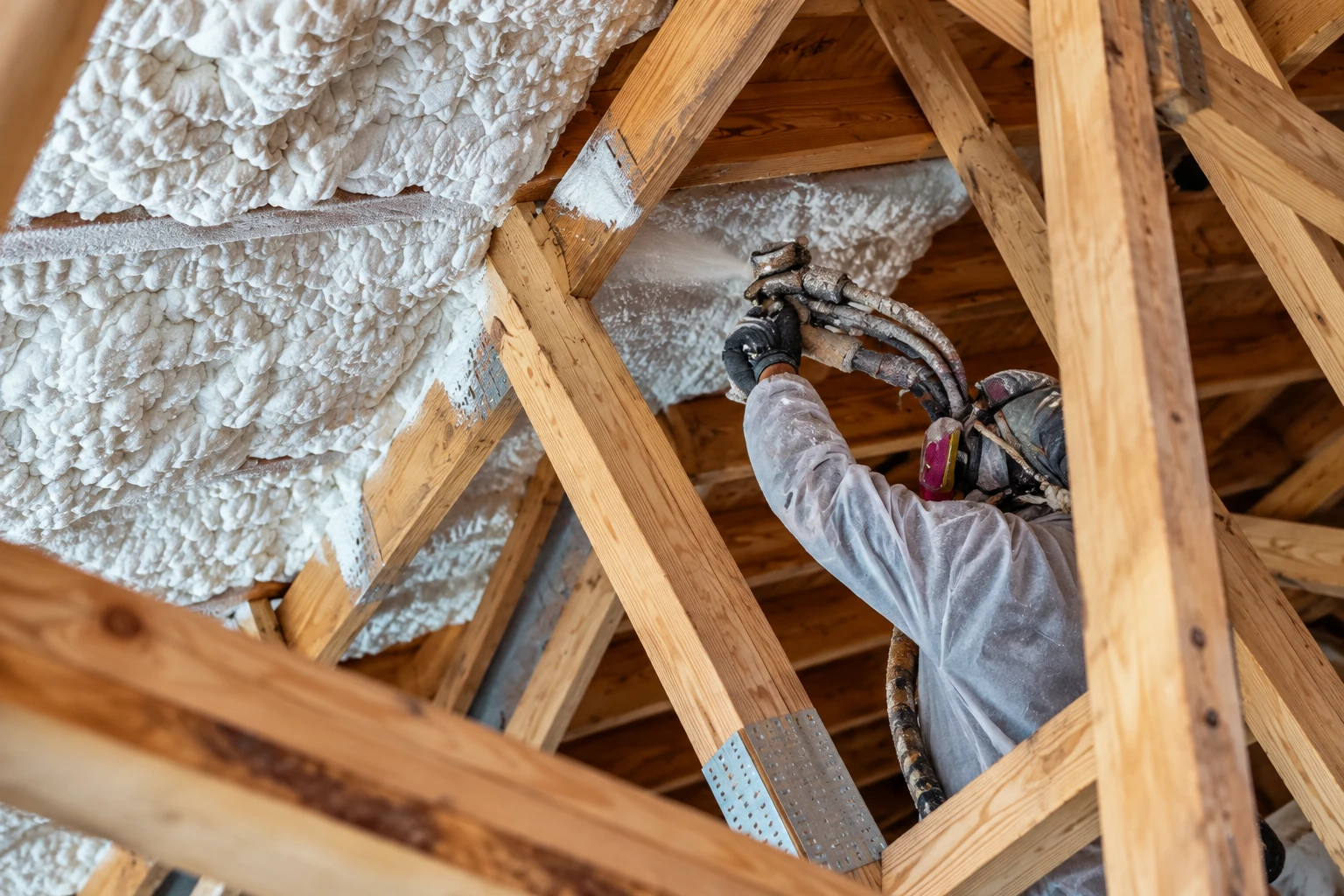
At A&C Twin Falls Spray Foam Insulation, open-cell foam insulation is a spray foam we put into Twin Falls homes to insulate and seal drafts in one layer. It expands into the gaps around framing, pipes and wires, and at the usual thickness it counts as air-tight, so it stops the moving air that makes a room drafty. It's a soft foam that needs some depth to do its job, which is why it suits roof decks, open walls and other spots with room to build it up.
Most people who call about open-cell foam have a drafty older house or a hot room upstairs, and they've heard foam fixes everything. It does seal air while it insulates, but it costs more than loose fill, so in a plain attic I'll usually tell you that sealing the gaps and topping up with blown-in insulation, loose fill blown through a hose, gets you most of the way for less, unless your ductwork runs up there. On a foam job, the price turns on how many square feet we're covering, how deep it needs to go, how easy the space is to reach and whether old material has to come out first. The schedule turns mostly on weather, because the foam needs the right air and surface temperature, humidity and dry surfaces, so in a cold or damp spell we may warm the space, move the day or use a product made for the season. I'll give you your own figure once I've seen the space.
Details to note before an estimate
- The spaces to insulate and their rough size
- Inches of old insulation already up there
- Any damp spots, stains or droppings
- Anyone at home with asthma or allergies
How we install open-cell foam insulation
Open-cell suits spots with room for depth, like a roof deck, open wall cavities or the floor over a garage, where stopping drafts is the main goal. Before I recommend it, I ask whether anyone in the house has asthma or allergies, and if foam is the right call, we help you plan your time out of the house. On the job, old material that's wet or full of droppings goes first through insulation removal, because foam sprayed over a problem only hides it. Our crew masks off everything that shouldn't get foam, keeps vents clear wherever the attic still needs to breathe and sprays an even depth right out to the edges, since thin edges are usually where the cold gets back in. Then we trim the foam where it needs it, clean up and haul the waste away.
Some jobs need more than one kind of work. Ground moisture under the house has to be handled before any insulation goes up, so a damp crawl space usually gets a crawl space vapor barrier first. If you own a shop or a small building, we do commercial insulation too, and I look over the roof and walls the same way I'd look over your attic.
Other work that often goes with it
Commercial insulation
If you own a shop or small building, we look over the roof and walls and suggest insulation that fits how the space gets used.
Crawl space vapor barrier
When the crawl space smells musty or the dirt stays damp, a sheet over the ground helps keep that moisture away from the floor framing above.
What happens when you call about open-cell foam in Twin Falls?
Call or send the form
Call (208) 544-9023 or send the form with the space you want insulated, and we'll set a time for me to come out. If anyone at home has asthma or allergies, mention it then so we can talk options early.
I look over the space
I check what's already there, from old insulation to damp spots and droppings, measure the area and write you a price for the work along with my honest take on whether open-cell fits. If something needs fixing before foam goes in, you'll hear about it first, and we settle the spray day and where you'll stay.
Our crew sprays and cleans up
Our crew does the install with a lead installer on site who knows what we talked about at the estimate. Once you're back in the house, we walk the finished job with you.
Questions before you book open-cell foam
How much does open-cell foam insulation cost in Twin Falls?
Open-cell foam in Twin Falls usually costs about $1,700 to $2,600 for 1,000 square feet sprayed 3 inches thick. That's the going rate in the area, not our quote, and a space that needs more depth than that will land higher. Whatever your number comes to, it's satisfaction guaranteed on every job.
What is the best way to choose between open-cell and closed-cell foam?
Choose by the space, using open-cell where there's room for depth and drafts are the main problem, and closed-cell foam where the space is thin or moisture has to be held back. Open-cell rates about R-3.6 per inch and typical closed-cell about R-6, R-value being how well insulation slows heat, so open-cell needs more depth to do the same work. Open-cell also stops air but lets moisture vapor pass, while closed-cell at its usual thickness holds vapor back, which matters in a basement or anywhere damp.
How long do we have to stay out of the house after spray foam?
Consumer safety guidance says residents should leave for at least 24 hours, so plan somewhere else to stay for at least that long. Your re-entry time, meaning when you can come back, can run longer depending on the product, the house and whether young kids or older folks live there. Ask us when your household can return, and we'll help you plan around it.
Is spray foam a good idea if someone in my house has asthma?
It may not be, and EPA guidance says people with asthma, respiratory allergies, skin conditions or a past sensitivity to isocyanates, a chemical used in spray foam, should carefully review the product information first. Those households may want to consider other kinds of insulation instead. If that's your house, we can look at loose fill or other options at the estimate.
What building codes cover insulation work in Twin Falls?
The city's Building Safety Department works from adopted residential and energy codes with Idaho's amendments, and it places Twin Falls in climate zone 5B. That zone shapes how much insulation a house here is expected to have, so a thin space where open-cell can't build up enough depth is usually a spot for something else. We're based in Twin Falls and do the same work in Jerome, Kimberly and the other cities around it.
How do I check that an insulation contractor is registered in Idaho?
You can look up a contractor's registration through the Idaho Contractors Board, which handles registration for the state and also takes complaints. If you'd rather ask, the board answers questions at (208) 334-3233 or BCRE-Licensing@dopl.idaho.gov. We're fully licensed and insured, and I'm glad to have you check before you book.
Get a free open-cell foam estimate for your house
Send the form and we'll reply within one business day to set a time. I come out myself, look over the space and give you a free estimate on site, and there's no obligation to book.
Explore our services and areas
Services
- Spray foam insulation
- Attic insulation
- Blown-in insulation
- Home insulation
- Insulation removal
- Crawl space insulation
- Wall insulation
- Air sealing services
- Basement insulation
- Closed-cell foam insulation
- Commercial insulation
- Crawl space vapor barrier
- Vapor barrier installation
- Attic air sealing
- Retrofit insulation
Service areas
Find out if open-cell foam fits your house
Call (208) 544-9023 with the area you want insulated, its rough size and any health concerns at home, so the first visit gets you a real answer.