Crawl space vapor barrier in Twin Falls ID - a liner that covers the ground wall to wall
Musty smell or wet dirt under the house? We find the water first, then lay a liner with lapped seams you can check yourself.
- Service
- Crawl space vapor barrier
- Call
- (208) 544-9023
How do you know your crawl space needs a vapor barrier?
Musty smell in the house
You notice a damp, earthy smell in the rooms over the crawl space, often worse on warm days or when the heat kicks on. That usually means moisture is coming up off bare or poorly covered dirt, and the longer it goes on, the more it works into the floor framing and any insulation under the floor.
Water or mud underneath
You open the hatch and see puddles, mud or a dark waterline on the foundation. That usually points to a leak or water draining the wrong way, and every week it sits, the wood under your floors stays wet.
Torn or bunched old plastic
Thin plastic from years back is ripped, pushed into the corners or missing in patches, with dirt showing through. Wherever the ground is bare, it's putting moisture back into the crawl space, so that damp keeps reaching the underside of your floors.
What does a crawl space vapor barrier do for your house?
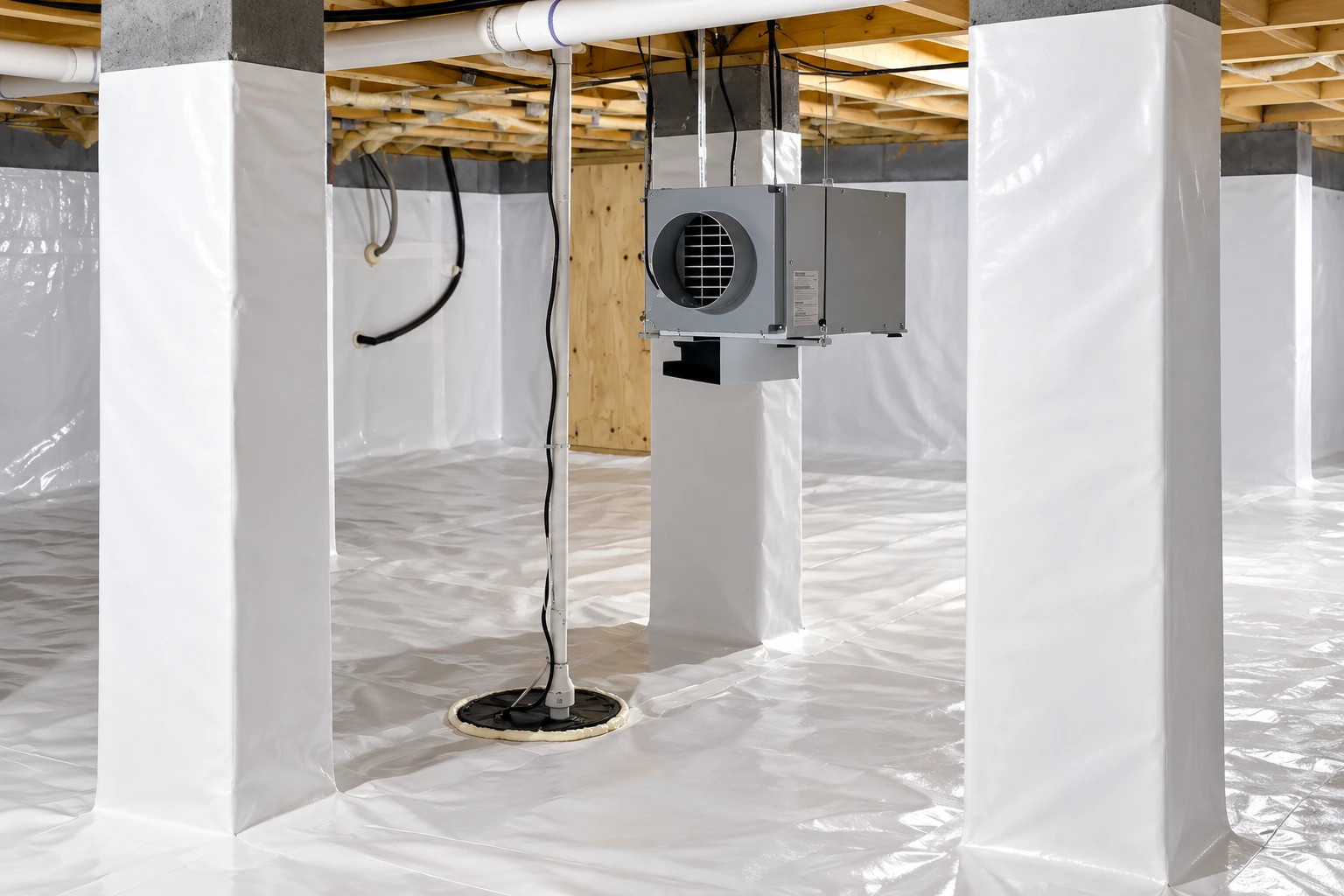
A crawl space vapor barrier in Twin Falls, ID is a heavy plastic liner laid over the dirt under your house, and a well-installed one helps hold down the ground moisture and soil gases, like radon, that come up out of the soil into the crawl space.
Most calls I get for this start with a musty smell, or a look under the house that turned up wet dirt, torn plastic or nothing at all over the ground. What moves the price is how big the crawl space is, how much wall and pier the liner has to climb, how tight the access is and how much debris and old plastic has to come out first. The schedule mostly turns on water, because if there's a leak or a drainage problem, it gets fixed before anything goes down. I come out, look it over and give you the figure for your house at the estimate.
Details to note before an estimate
- Rough size of the crawl space
- Any standing water or wet soil
- Condition of any old ground plastic
- How the vents are set up
- Furnace or water heater down there
How we put in a crawl space vapor barrier
I start by crawling the whole space with a light, because if there's standing water, we track down where it's coming from before any liner goes down, and plastic laid over a water problem just hides it. Our crew then pulls out debris, old torn plastic and anything stored down there so the liner can cover the ground completely, and lays it so water that already drains away keeps doing so. We run the liner up the walls and piers and lap the seams, so you can crawl in afterward and check the work yourself. Installer guidance has the liner run up walls, columns and footings, fastened where it needs help staying put, with every seam overlapped, so those are the points to compare bids on, and it's fair to ask whether a liner meets that guidance for thickness and perm rating, which is how much water vapor gets through it.
A liner takes care of the ground, but damp air still moves through the rest of the house. If walls or a basement are showing moisture too, vapor barrier installation there keeps it out of the framing. Air from the crawl space also rises through the house and leaks out the top, so attic air sealing often belongs on the same list, and I'll tell you at the visit whether it's worth doing now or can wait.
Other work that pairs with a crawl space liner
Vapor barrier installation
Older houses that feel clammy in finished rooms often need moisture control in the walls or basement as well as under the floor.
Attic air sealing
Closing gaps around lights, pipes and the attic hatch stops the house from pulling damp crawl space air up through the living space.
What happens after you call about a crawl space liner?
I look under your house
I come out myself, go over the whole crawl space and write the estimate, so you get a price for your house and a plain list of what it covers. If water, vents or a furnace down there need handling before a liner goes in, you'll hear that first.
Sort out what comes first
When you contact the city about a project, staff ask what's planned and where, tell you about any requirements and point you to other departments if needed, so we talk that through before the crew is booked. Any water source gets dealt with in this step too.
Our crew lays the liner
Our crew does the install with a lead installer on site who knows what you and I went over, and when it's done we walk the finished crawl space with you. Satisfaction guaranteed on every job.
Questions about crawl space vapor barriers
How much does a crawl space vapor barrier cost in Twin Falls?
A crawl space vapor barrier alone usually costs about $1,200 to $4,000 per job across the US, and that's a national range for the liner by itself, not our price. Any water repair or vent work that has to come first sits outside that figure. I'll give you the number for your house once I've been under it.
Does a crawl space vapor barrier help with radon?
It can help, because a well-installed liner helps minimize soil gases such as radon along with ground moisture, but it isn't a radon test or a promise about your levels. The state health department reports that 2 out of 5 Idaho homes have elevated radon and says testing is the only way to know your home's level. If you've got a test result, have it handy for the estimate.
What causes standing water in a crawl space, and does it have to be fixed first?
Yes, standing water has to come out and its source has to be found and repaired first, or it comes back and raises the moisture down there all over again. Usually it's something like a plumbing leak, a downspout emptying next to the foundation or ground that slopes toward the house. Finding it is the first thing I look for when I'm under there.
Is sealing the crawl space vents enough to stop moisture?
No, sealing the vents without handling the rest of the crawl space can actually raise the moisture down there. If fuel-burning equipment that vents naturally, like some gas furnaces and water heaters, sits in the crawl space, closing it up could potentially be deadly, so the whole space gets planned before any vent is closed. In a sealed crawl space, the seams and the spots where pipes and posts pass through the liner also get sealed with a durable sealant that suits the liner.
Does a crawl space vapor barrier contractor need to be registered in Idaho?
In Idaho, anyone working a construction job over $2,000 in materials and labor is covered by contractor registration unless they're exempt, and the state's Division of Occupational and Professional Licenses handles it. We're fully licensed and insured. It's fair to ask any contractor you're comparing about theirs.
How do I take care of a crawl space vapor barrier after it's in?
Mostly by keeping things off it, because boxes and other items stored on a crawl space membrane can keep it from working as well and can damage it. If you've been using the crawl space for storage, plan on a new spot for those things and keep the space clear going forward.
Get a crawl space vapor barrier estimate after I've looked under your house
Send the form and we'll reply within one business day to set a time. I come out, look over your crawl space and give you a free estimate on site, with no obligation to book. If anything needs fixing before a liner goes down, you'll hear that first.
Explore our services and areas
Services
- Spray foam insulation
- Attic insulation
- Blown-in insulation
- Home insulation
- Insulation removal
- Crawl space insulation
- Wall insulation
- Air sealing services
- Basement insulation
- Closed-cell foam insulation
- Open-cell foam insulation
- Commercial insulation
- Vapor barrier installation
- Attic air sealing
- Retrofit insulation
Service areas
Get your crawl space looked at first
Jot down any standing water, how your vents are set up, any furnace or water heater down there and any radon test result, and the first visit covers more ground.